
Wound care dressings are sterile medical devices applied directly to a wound to manage moisture, protect granulating tissue, control bacterial load, and support each phase of the healing process. Modern dressings go far beyond passive coverage - the right product actively shapes the wound microenvironment, enabling wounds to epithelialise roughly twice as fast as those left to dry. Choosing the correct dressing depends on wound type, depth, exudate volume, infection status, and periwound skin condition. This 2026 guide walks South African clinicians and procurement teams through the key dressing categories, the TIME framework for wound assessment, and how to match product chemistry to wound biology for faster, safer healing.
-
Hydrocolloid Dressings suit Stage I and II pressure ulcers and low-to-moderate exudate wounds - they support autolytic debridement and can remain in place for up to seven days, reducing dressing-change trauma
-
Foam Dressing with Silver are indicated for infected chronic wounds, diabetic foot ulcers, and heavily exuding pressure injuries - ionic silver kills MRSA and Pseudomonas while the foam core absorbs exudate
-
Calcium alginate dressings absorb up to 20 times their weight in exudate and support haemostasis - the first choice for heavily exuding, cavity, and bleeding wounds
-
Hydrogel dressings donate moisture rather than absorb it - used for dry, sloughy, or necrotic wounds and partial-thickness burns where rehydration and autolytic debridement are needed
-
Cost-per-day of healing matters more than unit price - a dressing lasting five days typically outperforms a cheaper one changed daily by reducing nursing time, infection risk, and patient discomfort
-
The TIME framework - Tissue, Infection/Inflammation, Moisture, Edge - provides a structured clinical assessment before every dressing selection, ensuring product choice matches wound phase rather than arbitrary protocol
Key Takeaways
-
Modern wound care dressings actively shape the wound microenvironment by balancing moisture, temperature, and bacterial load, enabling wounds to epithelialize roughly twice as fast as those left to dry.
-
Hydrocolloid dressings are ideal for stage I and II pressure ulcers and low to moderately exuding wounds, supporting autolytic debridement while maintaining an optimal moist healing environment for up to seven days.
-
Foam dressings with silver combine high absorbency with antimicrobial ionic silver to control critical colonization and infection in chronic leg ulcers, diabetic foot ulcers, and heavily exuding pressure injuries.
-
Calcium alginate dressings absorb up to 20 times their weight in exudate and support hemostasis, making them essential for heavily exuding, cavity, and bleeding wounds, while hydrogel dressings provide moisture for dry or necrotic tissue.
-
Systematic wound assessment using the TIME framework (Tissue, Infection/Inflammation, Moisture, Edge) ensures clinicians select the right dressing matched to wound phase, exudate level, and infection status rather than relying on arbitrary protocols.
-
Cost-per-day of healing matters more than unit price; a dressing lasting five days often outperforms cheaper options changed daily, reducing nursing time, patient discomfort, and overall care costs.
How Modern Wound Care Dressings Support the Healing Process
Modern wound care dressings do far more than cover an injury. They actively shape the wound microenvironment, balancing moisture, temperature, gas exchange, and bacterial load to accelerate the body's natural repair sequence. The principle of moist wound healing, first described by George Winter in 1962, remains the foundation: wounds covered with an appropriate dressing epithelialize roughly twice as fast as those left to dry.
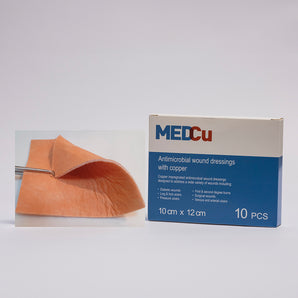
A well-chosen dressing manages exudate without causing maceration, protects granulating tissue from trauma during dressing changes, and creates a barrier against external contaminants. Some advanced products go further, releasing antimicrobial agents like ionic silver or chlorhexidine, while others use autolytic debridement to soften and remove non-viable tissue.
In clinical practice, the right dressing reduces nursing time, supports patient comfort, and lowers complication rates. That's why we recommend treating dressings as therapeutic tools, not consumables, every selection should be matched to the wound's current phase of healing.
Key Factors to Consider Before Selecting a Dressing
Before reaching for any product, we assess the wound systematically. The TIME framework, Tissue, Infection or Inflammation, Moisture balance, and Edge of wound, gives clinicians a structured starting point. Within that, several practical factors guide our selection:
-
Wound type and aetiology: Pressure ulcer, surgical incision, burn, diabetic foot ulcer, or traumatic wound.
-
Depth and tissue involvement: Superficial, partial-thickness, or full-thickness.
-
Exudate level: None, low, moderate, or heavy.
-
Infection status: Clean, colonised, critically colonised, or infected.
-
Periwound skin condition: Fragile, macerated, or intact.
-
Anatomical location: Sacrum, heel, limb, joint, requiring different conformability.
-
Patient factors: Allergies, mobility, pain tolerance, and care setting.
Cost-per-day of healing matters more than unit price. A dressing that stays in place for five days often outperforms a cheaper one changed daily, both clinically and economically.
Hydrocolloid Dressings for Moist Wound Healing
Hydrocolloid dressings are one of the most reliable workhorses in modern wound management. Made from gel-forming agents like carboxymethylcellulose bonded to a flexible, waterproof outer film, they interact with wound exudate to form a soft gel that maintains an optimal moist environment.
We typically reach for a Hydrocolloid Dressing when managing:
-
Stage I and II pressure ulcers
-
Minor burns and abrasions
-
Donor sites and post-operative wounds
-
Low to moderately exuding chronic wounds
Their occlusive nature supports autolytic debridement, gently liquefying necrotic tissue without damaging healthy granulation. Patients appreciate the discreet, skin-tone profile and the fact that wear times of three to seven days are realistic, which reduces dressing-change pain and conserves clinical resources. Hydrocolloids are not suitable for heavily exuding or infected wounds, where a more absorbent or antimicrobial option is needed.
Foam Dressings With Silver for Infection Control
When a wound shows signs of critical colonisation or active infection, our go-to combination is absorbency plus antimicrobial action. A Foam Dressing with Silver delivers exactly that, pairing a highly absorbent polyurethane foam core with sustained-release ionic silver to reduce bioburden across a broad spectrum of bacteria, including MRSA and Pseudomonas.
A silver dressing for wound care is particularly valuable for:
-
Chronic leg ulcers with delayed healing
-
Diabetic foot ulcers at infection risk
-
Surgical wounds with dehiscence
-
Heavily exuding pressure injuries
The foam wicks fluid vertically, protecting periwound skin from maceration, while the soft conformable structure cushions bony prominences. According to a 2023 Cochrane review, silver dressings can shorten healing time in infected chronic wounds when used as part of a structured antimicrobial stewardship plan, typically a two-week trial, then reassessed.
Calcium Alginate and Hydrogel Dressings for Exudate and Dry Wounds
No single dressing handles every wound, which is why alginates and hydrogels sit at opposite ends of the moisture spectrum. Together, they cover scenarios that hydrocolloids and foams can't fully address.
When to Use Calcium Alginate Dressings
Derived from seaweed, a Calcium Alginate Dressing absorbs up to 20 times its weight in exudate, transforming into a soft gel on contact with wound fluid. The calcium-sodium ion exchange also supports haemostasis, making alginates ideal for:
-
Heavily exuding wounds
-
Cavity and sinus wounds requiring packing
-
Bleeding surgical or traumatic wounds
-
Sloughy wounds needing autolytic debridement
Avoid alginates on dry or lightly exuding wounds, they can desiccate the wound bed and adhere painfully on removal.
When to Use Hydrogel Dressings
A Hydrogel Dressing is the mirror image, delivering moisture rather than absorbing it. Composed of 70–90% water in a gel matrix, hydrogels rehydrate dry, sloughy or necrotic tissue and soothe painful wounds. We use them for dry pressure ulcers, radiation skin reactions, minor burns, and to soften eschar before debridement. They're cooling on application, which patients with painful wounds genuinely appreciate.
Specialty Dressings: Non-Woven Island, Chlorhexidine Gauze, and Silver Options
Beyond the core categories, several specialty dressings solve specific clinical problems we encounter every day.
A Non Woven Island Dressing combines a soft absorbent pad with an adhesive non-woven border, ideal for post-operative incisions, IV sites, and minor lacerations. It's breathable, comfortable, and gentle on fragile skin, a practical first-line cover for clean, low-exudate wounds.
For wounds where adherence and infection prevention are both concerns, a Chlorhexidine Gauze Dressing impregnated with paraffin and 0.5% chlorhexidine offers a non-stick interface with mild antimicrobial cover. We use it routinely on superficial burns, skin grafts, donor sites, and abrasions, where pulling away dried gauze would damage new epithelium.
Silver-based specialty options, in foam, alginate or contact-layer formats, round out the antimicrobial arsenal. Matching the silver carrier to the wound's exudate profile is what separates effective use from wasted spend.
Choosing Dressings for Burns and Complex Wound Care
Burns demand a more nuanced approach than most acute wounds because tissue damage continues to evolve in the first 48–72 hours. When selecting dressings for burns wound care, we match the product to burn depth and exudate trajectory.
-
Superficial (first-degree) burns: Hydrogel sheets or simple non-adherent covers to soothe and protect.
-
Superficial partial-thickness burns: Paraffin or chlorhexidine gauze, hydrocolloids, or foam dressings depending on exudate.
-
Deep partial-thickness burns: Silver foam or silver-impregnated contact layers to manage bioburden and exudate simultaneously.
-
Full-thickness burns: Specialist referral: antimicrobial dressings are typically a bridge to surgical management.
Complex wounds, dehisced surgical sites, fistulae, malignant wounds, often require layered strategies: a primary contact layer, an absorbent secondary, and a secure fixation. The principle is the same throughout: control infection, manage moisture, protect the periwound, and minimise change-related trauma.
Best Practices for Applying and Changing Wound Dressings
Even the best dressing underperforms if it's applied poorly. We follow a consistent clinical routine to get the most from every product:
-
Assess and document the wound at every change, size, depth, exudate, tissue type, periwound, and pain score.
-
Cleanse appropriately with sterile saline or a wound-friendly solution: avoid cytotoxic agents on healing tissue.
-
Dry the periwound thoroughly so adhesives bond properly and maceration is minimised.
-
Size the dressing with at least 2–3 cm overlap onto intact skin for hydrocolloids and foams.
-
Apply without tension, smoothing from the centre outward to avoid shear and lift.
-
Date and initial the dressing so the next clinician knows the change schedule.
-
Change based on clinical indication, strikethrough, leakage, lifting edges, or signs of infection, not arbitrary timetables.
For more guidance on evidence-based wound assessment, Wounds International and the WHO clinical resources publish freely accessible best-practice documents that complement local protocols.
Eventually, choosing the right wound care dressing is about matching product chemistry to wound biology. When we get that match right, healing accelerates, complications drop, and patients return to normal life faster, which is exactly what every clinician and procurement team wants from their dressing formulary.
Frequently Asked Questions About Wound Care Dressings
What is the best wound care dressing for pressure ulcers?
For Stage I and II pressure ulcers, hydrocolloid dressings are ideal as they support moist wound healing and autolytic debridement. For heavily exuding pressure injuries, foam dressings with silver provide better absorbency and antimicrobial protection. The choice depends on exudate level and infection risk.
How do modern wound care dressings accelerate healing?
Modern wound dressings work by maintaining a moist healing environment, balancing moisture and gas exchange, managing bacterial load, and protecting granulating tissue. According to moist wound healing principles, wounds covered with appropriate dressings epithelialize roughly twice as fast as those left to dry.
Can foam dressing with silver be used on infected wounds?
Yes. Foam dressing with silver combines absorbency with sustained-release ionic silver to reduce bioburden across bacteria including MRSA and Pseudomonas. A 2023 Cochrane review found silver dressings can shorten healing time in infected chronic wounds when used as part of a structured antimicrobial stewardship plan.
What is the difference between calcium alginate and hydrogel dressings?
Calcium alginate absorbs up to 20 times its weight in exudate, ideal for heavily exuding wounds. Hydrogel dressings are 70–90% water and deliver moisture to dry wounds. They work at opposite ends of the moisture spectrum, addressing different wound conditions within a complete dressing protocol.
How often should wound care dressings be changed?
Change dressings based on clinical indication - strikethrough, leakage, lifting edges, or infection signs - not arbitrary schedules. Hydrocolloid dressings typically last 3–7 days. Cost-per-day of healing matters more than unit price; fewer changes reduce pain, infection risk, and nursing time.
What dressings are best for burn wound care?
Burn dressing selection depends on depth and exudate: superficial burns benefit from hydrogel sheets, superficial partial-thickness from chlorhexidine gauze or hydrocolloids, and deep partial-thickness from silver foam. Full-thickness burns typically require specialist referral and surgical management.