Medical grade honey is a sterilised, standardised wound care product licensed as a medical device, and it is not the same as the honey in your kitchen cupboard. Used correctly, medical grade honey for wounds can support autolytic debridement, reduce odour and help manage bacterial load in sloughy, necrotic and infected wounds.
This guide is written for wound care nurses, podiatrists and primary healthcare clinicians across South Africa who are deciding whether to add a honey wound dressing to their protocol. It is also written for patients and caregivers asking a reasonable question: can I put honey on this wound at home?
The short answer is that only medical grade honey belongs on a wound, and only with clinical advice. Below, we cover what medical grade honey is, how it works, when it is indicated, when it is not, and how the main dressing formats compare.
Read this first
Never use supermarket honey on a wound. Retail and raw honey are not licensed as medical devices, are not sterilised for wound contact, and their antibacterial activity is not standardised.
Raw and table honey can carry Clostridium botulinum spores. In an open wound these spores can, in rare cases, cause wound botulism, a serious and potentially fatal condition. Retail honey may also contain heavy metals and pesticide residues from the environment (Source: DermNet NZ).
If you are a patient or caregiver wondering whether honey will help a wound heal, speak to a clinician first. Do not use kitchen honey. Book an appointment with a nurse, GP or podiatrist before applying anything to an open wound.
Key takeaways
- Medical grade honey is a sterilised, regulated wound care product licensed as a medical device. Supermarket honey should never be used on wounds, as it carries contamination risks including Clostridium botulinum spores.
- It supports healing through four mechanisms: osmotic pull, low pH, hydrogen peroxide generation and anti-biofilm activity. This makes it useful for sloughy, necrotic and infected wounds.
- Dressings come in several formats (gel, ointment, foam-backed, border) with different wear times and exudate tolerances. Match the format to the wound type and fluid output.
- Contraindications include known honey or bee product allergy and wounds requiring immediate surgical debridement. Escalate if a wound deteriorates within 48 to 72 hours or shows spreading infection.
- Pair honey with an absorbent secondary dressing to prevent dilution and maintain antibacterial effect.
- Medical grade honey is not an antibiotic. It does not replace systemic antibiotics or surgery when infection spreads or systemic signs develop.
What Is Medical Grade Honey?
Medical grade honey is honey that has been sterilised by gamma irradiation, sourced under controlled conditions, standardised for antibacterial activity, and licensed as a medical device for wound care. That regulatory status is the whole point: it is a manufactured product with a known, repeatable specification.
Gamma irradiation removes the risk of Clostridium botulinum spores without heating the honey, which means the natural properties that support wound healing are preserved. Products such as the L-Mesitran medical grade honey range are manufactured to a consistent standard for clinical use.
A 2015 Cochrane review examining honey in wound healing found evidence that honey may help certain wound types heal faster than some conventional dressings, while noting variation across wound categories (Source: Cochrane, 2015). Confirm a product is registered as a medical device before you introduce it to a protocol.

How It Differs From Supermarket and Table Honey
The difference between medical grade honey and supermarket honey is safety, sterility and standardisation. Table honey is a food product with no guaranteed antibacterial strength and no sterilisation for wound contact.
Medical grade honey is sterilised, batch-tested and formulated for a wound bed. Supermarket honey may vary from jar to jar and may carry environmental contaminants (Source: PMC). Never substitute a food-grade product for a licensed wound dressing.
The Role of Medical Grade Manuka Honey
Medical grade manuka honey is one type of medical grade honey, characterised by methylglyoxal (MGO) derived from the manuka plant. It is not the only medical grade honey, and manuka is not automatically superior for every wound.
Many effective formulations use non-manuka honey and add components such as vitamins C and E or lanolin to support the wound environment. Match the formulation to the wound, not to the marketing.
How Medical Grade Honey Works on Wounds
Medical grade honey works on a wound through four main actions: osmotic pull, low pH, hydrogen peroxide generation and a moist healing environment. It is not an antibiotic and should never be described as one.
The high sugar content creates an osmotic effect that draws exudate and cellular debris out of the wound bed, which supports autolytic debridement of slough and necrotic tissue. The low pH and slow release of hydrogen peroxide help lower bacterial load without the resistance concerns linked to antibiotics.
Medical grade honey also maintains a moist wound environment and shows anti-biofilm activity. A University of Ghent study published in Antibiotics reported that medical grade honey disrupted established bacterial biofilms in laboratory conditions (Source: Antibiotics, University of Ghent).
A common error in wound clinics: applying medical grade honey to a heavily exuding wound without an absorbent secondary dressing. The exudate dilutes the honey and the antibacterial effect drops. Pair honey with the right secondary dressing for the exudate level.
When Medical Grade Honey Is Indicated
Medical grade honey is clinically indicated for sloughy, necrotic, malodorous, infected and colonised wounds, as well as several chronic and acute wound types. It is designed for use where autolytic debridement and bacterial load management are the priority.
Common indications include:
- Sloughy and necrotic wounds needing autolytic debridement
- Malodorous wounds, where honey may help reduce odour
- Infected and colonised wounds
- Diabetic foot ulcers
- Venous leg ulcers
- Burns and skin graft donor sites
- Post-operative and surgical wounds
A practical scenario: a venous leg ulcer with 60% slough coverage and a moderate odour is a textbook case where a honey dressing supports gradual debridement while a compression system addresses the underlying cause. Reviews of honey in advanced wound care report benefit across these categories, with the strongest signal in chronic sloughy wounds (Source: PMC). Assess the wound bed and classify the tissue type before selecting honey.
When It Should Not Be Used: Contraindications and Cautions
Medical grade honey should not be used in patients with a known honey or bee product sensitivity, or on wounds that require immediate surgical debridement. In those cases, honey is the wrong tool, not a slower version of the right one.
Use caution and monitor closely in patients with diabetes, because the osmotic action pulls fluid and the wound needs regular review. Some patients report transient stinging or a drawing sensation shortly after application, caused by the osmotic effect. This usually settles, but persistent or severe pain warrants review (Source: DermNet NZ).
Escalate to a clinician, or refer for urgent care, if you see spreading cellulitis, systemic signs of infection such as fever, exposed bone or tendon, or rapid deterioration of the wound. Honey does not replace antibiotics or surgery when those are indicated.
We have seen clinicians persist with a honey dressing on a deteriorating diabetic foot ulcer when the correct step was urgent referral. If a wound worsens over 48 to 72 hours, escalate rather than continue.
Types of Honey Wound Dressings and How to Apply Them
Honey wound dressings come in several formats, and the right one depends on exudate level, wound depth and how long you want the dressing to stay in place. Choosing the format is often more decisive than choosing the honey itself.

Here is how the main formats compare, using the L-Mesitran medical grade honey range formats as reference points against generic categories:
| Format | Exudate level suited to | Wound depth | Typical wear time | Ease of application |
|---|---|---|---|---|
| Gel (e.g. L-Mesitran Soft wound gel) | Low to moderate | Shallow to cavity | 1 to 3 days | Easy, fills cavities |
| Ointment (e.g. L-Mesitran Ointment) | Low | Shallow, fragile skin | 1 to 2 days | Easy, thin layer |
| Tulle / net | Low to moderate | Shallow | 1 to 3 days | Moderate, needs cover |
| Foam-backed | Moderate to high | Shallow to moderate | 2 to 5 days | Easy, absorbs exudate |
| Border dressing | Low to moderate | Shallow | 2 to 5 days | Easy, self-adhesive |
| Hydro / composite | Moderate | Shallow to moderate | 2 to 4 days | Moderate |
Scroll the table sideways to see all columns.
General application: clean the wound per protocol, apply the honey product to the wound bed, cover with an appropriate secondary dressing, and match the change frequency to exudate. Higher exudate means more frequent changes to protect the honey concentration. Compare formats against your patient's exudate profile before you order. Check the wound bed before selecting a format.
Incorporating Honey Dressings Into a Wound Care Protocol
In South African wound care practice, medical grade honey fits into a protocol as an antimicrobial and debriding option, guided by SAHPRA device registration and clinical direction from WHASA. It is one line in a broader assessment, not a standalone answer.

Any wound care device sold for clinical use in South Africa should hold appropriate SAHPRA registration, which means clinicians can rely on a consistent, regulated product (Source: SAHPRA). The Wound Healing Association of Southern Africa (WHASA) provides clinical guidance on assessment and dressing selection that should anchor local protocols (Source: WHASA Clinical Guidelines).
The chronic wound burden in South Africa is significant, especially diabetic foot ulceration in the public sector, where dressing change frequency drives cost in resource-constrained facilities. A dressing with a longer wear time can lower the number of changes, which means less nursing time and lower consumable spend per wound.
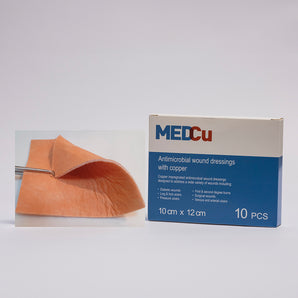
Dynamed Pharmaceuticals distributes advanced wound care products, including medical grade honey, from Durban and Johannesburg. Explore the full advanced wound care range and the linked antimicrobial wound dressings when building a protocol. Request a clinical training session for your team before roll-out.
Guidance for Patients and Caregivers at Home
If you are treating a wound at home, do not apply any honey to it without clinical advice, and never use supermarket or raw honey. Only a clinician can confirm whether a medical grade honey dressing is right for your specific wound.
Medical grade honey is a licensed product, but even licensed products need the correct wound type, format and monitoring. A wound that looks minor can hide infection or an underlying condition such as diabetes or poor circulation.
See a clinician promptly if the wound is spreading, smells strongly, produces increasing fluid, or does not improve within a few days. These are signs that need professional assessment, not a change of home remedy.
You can review advanced wound care products in South Africa to understand the options, then discuss them with your nurse or GP. Speak to a registered healthcare professional before applying anything to an open wound.
Frequently Asked Questions
Is it safe to put honey on an open wound?
Only medical grade honey is safe on an open wound, and only with clinical advice. Supermarket and raw honey are not sterilised and can carry Clostridium botulinum spores, which can cause wound botulism. Consult a clinician before applying any honey product.
When should you not use a honey dressing?
Do not use a honey dressing on patients with a known honey or bee product allergy, or on wounds needing immediate surgical debridement. Use caution in diabetes. Escalate to a clinician if you see spreading infection, fever, or exposed bone or tendon.
How do you use honey as a wound dressing?
Clean the wound per protocol, apply the medical grade honey product to the wound bed, then cover with an appropriate secondary dressing matched to the exudate level. Change frequency depends on how much the wound produces. A clinician should guide the process.
How long can a honey dressing stay on a wound?
Most honey dressings stay on for one to five days, depending on the format and exudate level. Gels and ointments on low-exudate wounds may last two to three days, while heavily exuding wounds need more frequent changes to keep the honey effective.
What kind of honey is used for wound healing?
Medical grade honey is used for wound healing, including medical grade manuka honey and non-manuka formulations. All are sterilised by gamma irradiation and standardised for antibacterial activity. Table honey and raw honey should never be used on wounds.
Is medical grade honey an antibiotic?
No. Medical grade honey is not an antibiotic. It works through osmotic action, low pH, hydrogen peroxide generation and anti-biofilm activity. It does not replace systemic antibiotics when a spreading or systemic infection is present.
Where can I buy medical grade honey in South Africa?
Medical grade honey is available through Dynamed Pharmaceuticals, distributed from Durban and Johannesburg. View the L-Mesitran medical grade honey range and discuss suitability with a clinician before ordering for a specific wound.
Does medical grade honey sting?
Some patients feel transient stinging or a drawing sensation shortly after application, caused by the osmotic effect. This usually settles quickly. Persistent or severe pain should be reviewed by a clinician, as it may indicate an unsuitable product or an underlying issue.
What should I do if a wound treated with a honey dressing worsens over two to three days?
Escalate to a clinician or urgent care immediately. Signs of deterioration such as spreading cellulitis, fever, exposed bone or tendon, or rapid decline require professional assessment and intervention. Medical grade honey does not replace antibiotics or surgery when those are clinically indicated.
Building honey into your wound care protocol?
Medical grade honey has real clinical value in sloughy, malodorous and chronic wounds, but only when it is matched to the right wound and guided by a clinician. Assess the wound bed, choose the correct format, monitor closely, and escalate when a wound deteriorates.
Dynamed is the exclusive South African distributor of L-Mesitran, supplying the full range nationwide from Durban and Johannesburg, with clinical training and protocol support.
This information is intended as a general guide. Always consult a registered healthcare professional for diagnosis and treatment of any medical condition. Do not apply any honey product to a wound without clinical advice.