Roosin
Hydrogel Dressing
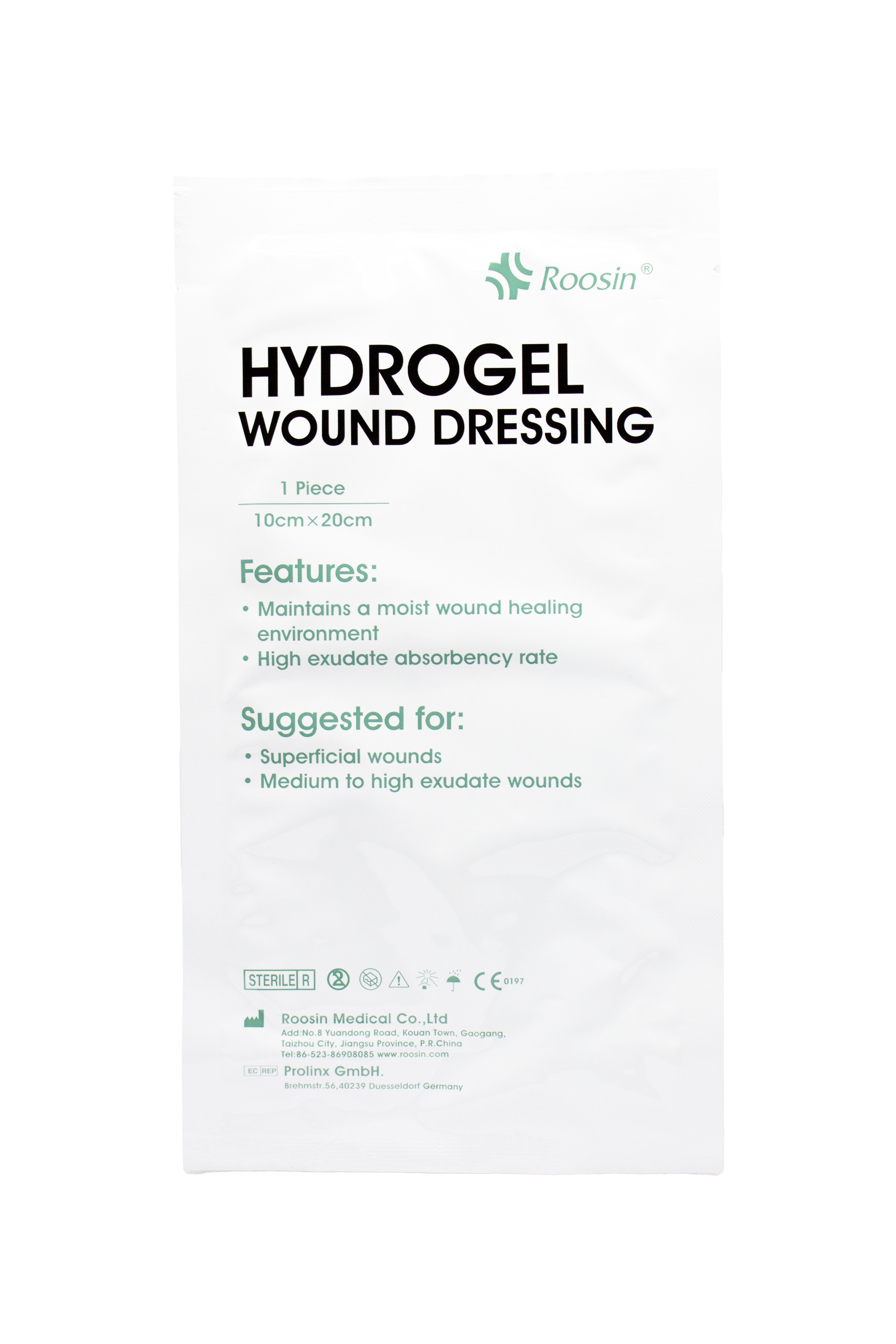
Our Hydrogel Wound Dressing is a semi-transparent, flexible gel that absorbs minimal fluid while donating moisture to dry wounds. This dressing accelerates epithelization, reduces pain, and provides hydration, making it ideal for dry or minimally exuding wounds. It is highly conformable and permeable to air and moisture vapour, promoting granulation and cooling the wound bed.
Indications: Pressure ulcers, venous ulcers, post-surgical wounds, traumatic wounds, donor sites, first and second-degree burns.
Sizes Available: 5x5 cm, 10x10 cm, 4.5x6.5 cm (with border), 7.5x10 cm (with border).
Quantity: 10 dressings per box.
Hydrogel dressing for moisture balance, comfort, and calmer healing
Some wounds don’t need more absorption. They need hydration.
That sounds almost too simple, but you’ll recognise it in practice: a wound bed that looks dry, tight, and stubborn; slough that doesn’t shift; a patient who dreads dressing changes because the site feels raw and “stuck”. In those moments, piling on another dry dressing can feel like trying to fix a stiff lock with more force. What you actually need is lubrication. Moisture. A bit of kindness.
That’s where a well-made hydrogel dressing fits.
Dynamed’s hydrogel wound dressing is designed to support moist wound healing by donating moisture to the wound surface and creating a more stable healing environment. It’s used across a wide range of settings, from busy wards and theatre follow-ups to outpatient clinics, step-down facilities, and home care.
And for procurement teams, it’s a straightforward truth: when wound care is smoother, costs and complications tend to behave too.
Here’s the thing: “too dry” is a clinical problem, not just a cosmetic one
Dry wounds can be deceptively tricky. They can look “clean” but still refuse to progress. They can be painful, especially when dressings adhere. And if the wound bed is dehydrated, cells involved in healing don’t move and function as well.
So yes, hydration matters. It supports:
- a healthier wound environment
- autolytic processes that help loosen non-viable tissue
- reduced dressing adherence and less trauma at change time
- patient comfort, which affects compliance in long-term care
You know what? It’s not that moisture fixes everything. It’s that moisture often removes the main obstacle that’s been slowing healing down.
What is a Hydrogel dressing, really?
A Hydrogel dressing is a water-based gel designed to maintain or restore moisture in the wound bed. In simple terms, it helps keep wounds from drying out and can soften slough or necrotic tissue to support gentle, natural debridement (autolysis).
That’s the clinical side.
The human side? Many patients describe a good gel dressing as “cooling” or “soothing”, especially on superficial burns or painful wounds. It can take the edge off.
And when a patient relaxes during a dressing change, the whole process becomes safer and faster. Less flinching, less accidental contamination, less stress for staff. It all connects.
Where this hydrogel wound dressing fits best
Dynamed’s hydrogel wound dressing is typically used where moisture donation and comfort are priorities, including:
- dry or minimally exuding wounds
- wounds with slough where autolytic debridement is appropriate
- superficial burns (first and some second-degree burns, per clinical assessment)
- abrasions and traumatic superficial wounds
- painful wounds where dressing adherence is a concern
- pressure injuries that present with dryness or slough
- donor sites and post-procedural wounds, when hydration support is indicated
A quick reality check: if a wound is heavily exuding, a hydrogel dressing on its own may not be the right primary choice. It’s a hydration tool. For high exudate, you typically need stronger fluid handling and then you choose hydration selectively.
It’s a mild contradiction, but it’s true: hydrogels are “wet”, yet they’re often used for wounds that are too dry.
The benefits that matter at the bedside and in the budget meeting
1) Moisture donation where it’s needed
This is the headline. hydrogel wound care is about controlling the wound environment, not drowning it. The goal is a wound bed that’s moist, not soggy.
2) Supports autolytic debridement
When used appropriately, a Hydrogel can help soften and loosen devitalised tissue. That supports the body’s own “clean-up crew” and can reduce aggressive mechanical disturbance.
3) Comfort, comfort, comfort
A gel dressing can reduce sticking and trauma at dressing changes. Many clinicians see better patient tolerance, especially in long-term wound management.
4) Better dressing changes (less drama, more consistency)
When dressings are less painful to remove, staff can follow protocol without shortcuts. Patients are less anxious. Families trust the care plan more. And you get fewer “we didn’t change it because it hurts” situations in home care settings.
That’s not fluffy. That’s outcomes.
A small digression that matters: wound care is often a behaviour problem, not a product problem
People love to blame products. But the truth is, wound care success often comes down to consistency: correct cleansing, correct frequency, correct dressing selection, and good handover notes.
A hydrogel dressing helps because it makes consistency easier. When patients tolerate care, teams stick to plans. When plans are followed, wounds progress.
It’s not magic. It’s momentum.
How to use hydrogel dressings properly
Here’s a simple, repeatable approach that works in most settings. Always apply clinical judgement and facility protocol, of course, but the steps stay familiar.
Step 1: Clean and assess
Clean the wound with sterile saline or sterile water. Assess exudate level and tissue type. If the wound is infected or heavily exuding, consider whether hydrogel wound care is appropriate at that stage.
Step 2: Apply the hydro gel
Apply an appropriate amount of hydro gel to the wound bed. The goal is contact and coverage, not excess pooling.
Step 3: Use a secondary dressing
Most hydrogels require a secondary dressing to hold the gel in place and manage any fluid shift. That secondary choice depends on exudate level and site. Think of the gel as the active environment manager and the secondary dressing as the protector and stabiliser.
Step 4: Secure appropriately
Secure with an appropriate fixation method based on site and skin condition. Avoid over-tightening, especially on fragile skin.
Step 5: Review and change based on the wound
Change frequency depends on wound condition, exudate, and protocol. If the secondary dressing becomes saturated, change sooner. If the wound is stable and comfort is good, you may be able to extend wear time within safe parameters.
Honestly, the “review” part is where good clinicians shine. Hydrogels are forgiving, but they still need reassessment.
Moisture balance without maceration (the line you’re always walking)
The key with hydrogel dressings is balance.
Too little moisture and you get sticking, pain, slow progress. Too much moisture and you risk maceration of peri-wound skin. That’s why:
- use the right amount of hydro gel
- choose a secondary dressing that matches exudate
- protect peri-wound skin where needed
- reassess frequently when the wound is changing
It’s a bit like seasoning food. You can always add, but you can’t easily take away once it’s flooded.
What procurement teams like about standardising a hydrogel option
If you’re managing a formulary, a tender pack, or supply across multiple facilities, you’re not just buying a product. You’re buying predictability.
A consistent hydrogel dressing supports:
- clearer protocols for dry or sloughy wounds
- more consistent training across wards
- smoother stock planning because usage is tied to clear indications
- fewer avoidable escalations when wounds stall due to dryness
It also supports documentation. When teams can clearly define when to use hydrogel wound care, notes become clearer, audits become easier, and continuity improves.
That’s the unglamorous side of good wound care. It’s paperwork and consistency. It still saves lives and limbs.
FAQs about hydrogel wound dressing
Can I use a hydrogel dressing on infected wounds?
Clinical judgement is essential. Hydrogels are often used to support autolysis and comfort, but infected wounds usually need targeted management and the right dressing strategy. Follow facility protocols and clinician assessment.
What if the wound starts producing more exudate?
That can happen as a wound changes phase. Adjust the secondary dressing accordingly, or reassess whether a Hydrogel is still the right primary choice.
Is this suitable for burns?
hydrogel dressings are commonly used for superficial burns and for comfort. The wound depth, infection risk, and clinical pathway will guide selection.
Will it sting?
Many patients find a gel dressing soothing, but sensation varies by wound type and patient sensitivity. If pain increases, reassess the wound and product choice.
Do I always need a secondary dressing?
In most cases, yes. The gel needs containment and the wound needs protection. The secondary dressing choice is what keeps the overall system stable.
How should it be stored?
Store according to facility guidance and product packaging instructions. Keep stock in a clean, dry area, and rotate using standard stock control practices.
The bottom line: hydrogel wound care that supports healing without making care harder
Dynamed’s hydrogel wound dressing is designed for wounds that need moisture, comfort, and a more stable environment to progress. It helps soften devitalised tissue where appropriate, reduces dressing adherence, and supports calmer dressing changes.
It’s not a “one product fixes all” solution. But when the wound is dry, sloughy, or painful, a hydrogel dressing can be the missing piece that gets things moving again.
And that’s what teams want. Progress.
Ready to source this hydrogel dressing?
If you’re standardising wound care across wards, building a tender schedule, or supplying distribution across South Africa and the SADC region, this product gives you a reliable hydrogel option with clear clinical fit.
- Request pricing for facility or bulk supply
- Confirm expected volumes for multi-site groups
- Ask about distributor support and ongoing availability
- Align your wound care protocol so teams use the right product at the right stage
When the wound bed is calm and hydrated, healing tends to stop feeling like a fight. That’s the goal of good hydrogel wound care.
Premium Hydrogel Wound Dressing by Dynamed Pharmaceuticals
Introduction to Hydrogel Wound Dressing
Hydrogel wound dressings are a crucial component in modern wound care, offering a flexible solution for managing dry or minimally exuding wounds. Dynamed Pharmaceuticals provides top-tier hydrogel dressings designed to enhance healing, reduce pain, and ensure patient comfort.
Evidence-Based Healing for Optimal Outcomes
Hydrogel wound dressings are widely recognised for their ability to promote autolytic debridement and maintain an ideal moist environment critical for tissue regeneration. As detailed in the National Center for Biotechnology Information (NCBI), hydrogel dressings are particularly effective for dry or minimally exuding wounds, aiding in pain relief and wound bed preparation for further healing interventions. Dynamed’s hydrogel dressings are designed with this clinical evidence in mind, supporting best practices in wound care across South African healthcare facilities. To explore the clinical application of hydrogels in detail, view the NCBI Wound Dressings Reference Guide.
Wound Care Demand on the Rise in South Africa
In South Africa, the wound care market is expected to generate ZAR 15.75 million in revenue in 2025, with a modest projected annual growth rate of 0.80% (CAGR 2025–2029). This growth is driven by the country’s high prevalence of chronic wounds and a growing awareness around the importance of effective wound management. With per capita revenue at ZAR 0.26 per individual, the market is steadily expanding, creating opportunities for trusted, clinically backed solutions. Dynamed’s locally manufactured hydrogel wound dressings meet this need by offering accessible, evidence-based care tailored to South African conditions. For more market insights, refer to the Statista South Africa Wound Care Market Overview.
Benefits of Hydrogel Wound Dressing
Our hydrogel wound dressings offer multiple benefits:
- Moisture Donation: Provides hydration to dry wounds, promoting a moist environment essential for healing.
- Pain Relief: Soothes and cools the wound, reducing pain and discomfort.
- Conformability: Highly flexible, easily conforming to various wound shapes and sizes.
- Barrier Protection: Permeable to air and moisture vapour, protecting the wound while allowing it to breathe.
Key Features
Product Performance
Hydrogel dressings from Dynamed are semi-transparent, flexible gels capable of absorbing minimal fluid. They donate moisture to dry wounds, accelerating epithelization and easing pain. Ideal for local application, these dressings maintain a moist wound healing environment, which is crucial for granulation and reducing the temperature of the wound bed.
Indications
Hydrogel wound dressings are suitable for:
- Pressure ulcers
- Venous ulcers of the lower extremities
- Post-surgical wounds
- Traumatic wounds and abrasions
- Donor sites
- First and second-degree burns
How to Use Hydrogel Wound Dressing
- Clean the Wound: Gently clean the wound and surrounding area with sterile water or saline solution, and dry the skin.
- Apply the Dressing: Fit the dressing to the wound, ensuring it overlaps the edges by at least 2 cm.
- Remove with Care: If the dressing is difficult to remove, irrigate with sterile physiological solution to ease the process.
Specifications
- Sizes Available:
- 5x5 cm
- 10x10 cm
- 4.5x6.5 cm (with border)
- 7.5x10 cm (with border)
- Quantity: 10 dressings per box
Why Choose Dynamed?
At Dynamed, we are dedicated to producing high-quality wound care products. Founded by Vinesh Maharaj in 2000, we have become South Africa’s leading manufacturer of wound care solutions. Our cutting-edge facility in Durban ensures each product meets the highest safety and efficacy standards.
Commitment to Quality
We prioritise exceptional quality in all our products. Our hydrogel wound dressings undergo rigorous testing to ensure they deliver optimal healing outcomes. Trust in Dynamed for reliable and innovative wound care solutions.
Customer Satisfaction
Customer satisfaction is our top priority. We aim to exceed the expectations of healthcare professionals and patients alike. Our hydrogel wound dressings are trusted across hospitals, clinics, and healthcare facilities in South Africa and the SADC region.
Innovative and Reliable
Innovation drives our mission at Dynamed. Our research and development team continuously works to bring you the latest advancements in wound care. We are committed to providing products that incorporate the newest medical technologies.
Conclusion
Effective wound care is essential for recovery and overall health. Dynamed’s hydrogel wound dressings offer a reliable solution for managing various wound types. By maintaining a moist environment and providing a barrier against bacteria, our dressings promote faster and more effective healing.
Explore our hydrogel wound dressings and discover the difference quality wound care can make. Trust Dynamed Pharmaceuticals for all your advanced wound care needs.