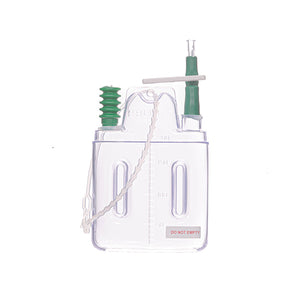

The Palin wound drainage system is a closed, constant low vacuum post-operative drainage system that pairs a surgical drain with a pre-vacuumed collection bottle. It is manufactured in South Africa by Werkomed and supplied nationally by Dynamed Pharmaceuticals, a SAHPRA-registered distributor based in Durban.
The origins of Palin® wound drainage
Palin is a South African wound drainage brand manufactured by Werkomed (Pty) Ltd, a medical device company that has supplied the South African healthcare industry since 1994. Werkomed is a locally owned business based in Johannesburg, and it develops and manufactures the Palin system domestically rather than importing it.
The system was developed in response to the needs of specialty surgical markets. Rather than offering a single fixed configuration, Palin was built around a modular idea: surgeons and theatre teams needed to combine different drain types, drain sizes and bottle volumes to suit the procedure in front of them. Over time the operating mechanisms and individual components have been modified and improved to widen that range of options.
The clinical problem behind the design is straightforward. After surgery, fluid gathers in the space left by tissue that has been removed or moved. Left undrained, that fluid raises the risk of haematoma and seroma and can slow recovery. Older open drainage methods left the wound partly exposed, which increased the chance of bacteria entering the site. A closed system moves fluid into a sealed bottle instead, keeping the wound protected while giving the clinical team an accurate reading of output.
What Palin is recognised for
Palin is best known in South African theatres for one specific engineering claim: a scientifically tested vacuum regulator that holds a genuinely constant low pressure. This is the feature that distinguishes it from bulb or bellow systems where suction falls away as the reservoir fills.
Testing conducted at the University of Stellenbosch found that the Palin regulator maintained an average regulated pressure of -115 mmHg with a standard deviation of 15 mmHg. According to the manufacturer, holding pressure at this level supports wound approximation by drawing the tissue layers together consistently, and prevents smaller drains from becoming clogged during use.
That last point matters more than it first appears. Because constant suction at -115 mmHg keeps narrow drains patent, Palin allows clinicians to use smaller drain sizes than would otherwise be practical. The manufacturer notes several benefits to smaller drains: less dead space in the wound area once the drain is removed, easier removal, and less discomfort for the patient at removal.
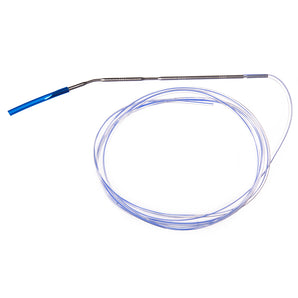
The system is also recognised for the design of its trocars. The double bendable trocar was developed in response to requests from specialist surgeons and can be bent up to 90 degrees, which gives more control over the exit path when placing a drain.
How constant low vacuum drainage works
Constant low vacuum drainage means the system applies a steady, gentle level of negative pressure rather than strong or intermittent suction. The Palin bottles are pre-vacuumed before use, so the vacuum is present the moment the system is connected and does not depend on manual compression.
The clinical argument for constant suction rests on how wound flaps behave. With intermittent suction, tissue layers are not held together continuously, which the manufacturer describes as the wound "breathing" between cycles. Constant suction instead holds the layers together throughout the drainage period. According to the manufacturer, this produces high initial drainage in the first 24 hours, after which output falls away substantially as the wound closes.
The components of a Palin system
A Palin system is assembled from a drain, a tubing set and a collection bottle, supported by a set of components that each perform a specific function.


Drains are available in three constructions: silicone centre fluted, synthetic middle perforated and PVC centre fluted. The fluted profile carries lengthways channels rather than presenting a plain round tube, so if one channel is compressed against tissue, others remain open and fluid keeps moving.
Choosing the right Palin drain and bottle
Selecting a Palin configuration means matching two decisions: the drain size and construction, and the bottle volume. Palin is designed so that any bottle size can be combined with any drain size and type, which is why the range is described as modular.
Drain sizes
| Drain size | Imperial | Availability | Typical use |
|---|---|---|---|
| 3.2 mm | 1/8" | Silicone and synthetic only | Smaller or superficial sites, lower output |
| 4.8 mm | 3/16" | All drain types | General surgical sites |
| 6.3 mm | 1/4" | Silicone only | Larger wounds with greater fluid volume |
| 8.0 mm | 1/3" | Silicone loose drain only | Deep or high-output sites |
For smaller sites the 3.2 mm silicone centre fluted drain is a common starting point, and the 4.8 mm gauge covers many general procedures. Where output is expected to be higher, the 6.3 mm drain or the wider-bore 8.0 mm silicone drain may be more appropriate. Synthetic middle perforated options are available in 3.2 mm and 4.8 mm for teams who prefer that construction.
Bottle sizes
Palin bottles are supplied in three volumes, all pre-vacuumed and marked at 10 ml intervals. The 200 ml bottle suits lower-output sites, the 400 ml bottle covers mid-range cases, and the 600 ml bottle reduces how often staff need to change containers on high-output wounds. For low-volume or day-case work, the 50 ml mini bellow set with drain and trocar offers a compact alternative. You can compare the complete range on the Palin drainage collection.
Safe use and handling
The benefit of a closed system depends entirely on the circuit staying sealed, so connections should be handled carefully during setup and every bottle change.
- Confirm the vacuum indicator shows active suction at setup and after each bottle change.
- Ensure the sliding clamp is closed before connecting, then open it to begin drainage.
- Record output against the 10 ml graduations at set intervals to support fluid balance monitoring.
- Keep the bottle below wound level so drainage is not impeded.
- Do not withdraw the drain past the black marker, which indicates the point where the drainage holes remain inside the wound area.
- Replace bottles using sterile technique to protect the closed circuit.
Need help specifying a Palin configuration for your theatre or ward?
Speak to the Dynamed team for product guidance, tender support or clinical documentation.
Speak to the Dynamed team